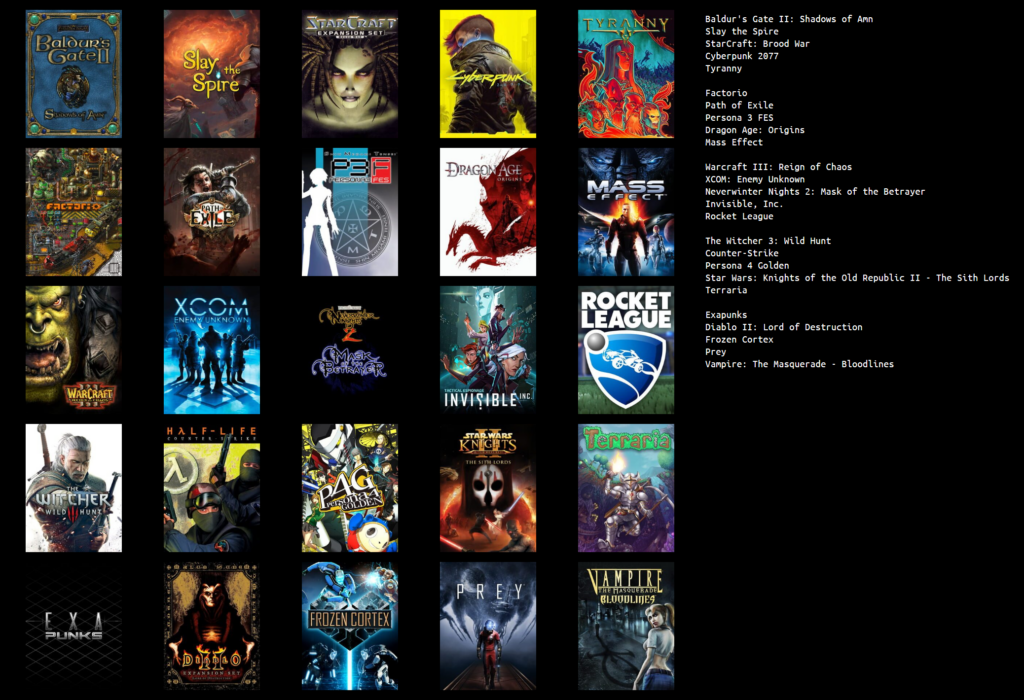
These are some of my favorite video game experiences over the last year. Part of starting this blog was to do some writing on other topics and build up a record of my thoughts over time. What better way to do that than make a list?
Writing up the blurbs for each game, I found it interesting that a game’s ranking did not have a lot of correlation with whether the thoughts I wanted to write about were more positive or negative. But rather than try to mold this into some pristine, consistent document that can stand up to the scrutiny of the Internet, I decided to just go with it.
Just know that the rankings are ordered 10 to 1 even if the text might suggest otherwise. The blurb then gives voice to some blend of my expectations, history with, emotions and/or thoughts about the game here at the end of the year. How much I go into describing the game is also based on some sense of how well-known I think the game is, whether accurate or not.
Oh, and for the title:
* Best as in absolutely the best. Infallibly accurate.
** The game does not have to have been released in the current year, I just had to play it this year. And play is used very loosely.
*** “First time” is nebulously defined as the first time I played enough to get a serious feel for the game, but this rule is ignored when I feel like it.
10. Danganronpa 2: Goodbye Despair
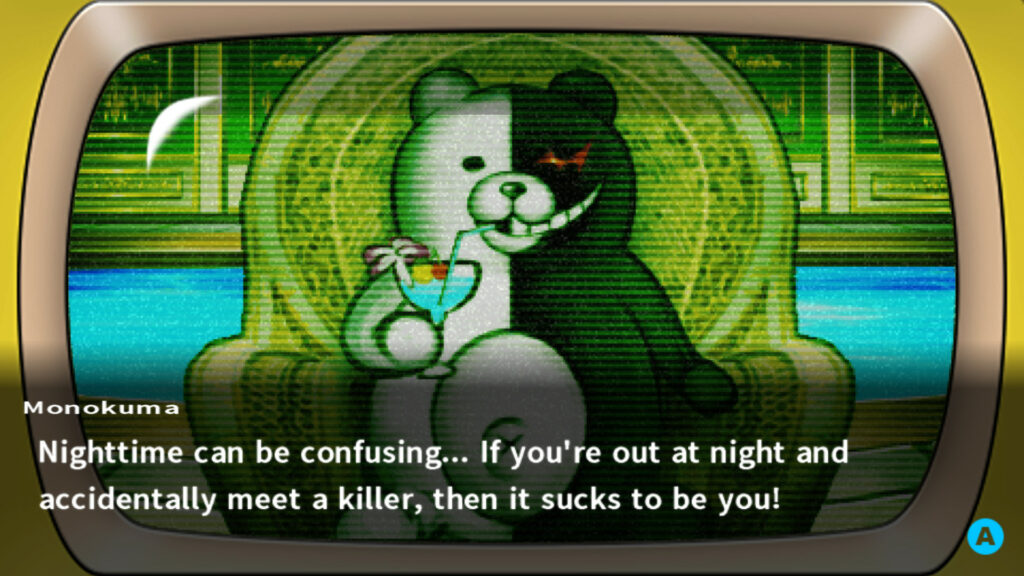
My partner and I played through the first two games of the series this year. She likes mysteries, especially when they have some thriller energy, so we gave it a try and enjoyed playing them a few hours a week for a couple months to completion. Particularly satisfying was pausing before the trials or other big reveals, meaning we’d have a few days to talk about (her) theories of the case.
For those who don’t know, the Danganronpa series are visual novels about students trapped in a school. They can only get out by murdering another student and getting away with it. Each case has you unraveling the mystery behind another classmate’s death, until the last case in each game where you figure out some greater mystery about the murder game itself.
Speaking for us, we actually both preferred the first game to the second, but I had completed it before, so the Arbitrary Rules of Top Tens disqualifies it.
9. Cyberpunk 2077: Phantom Liberty
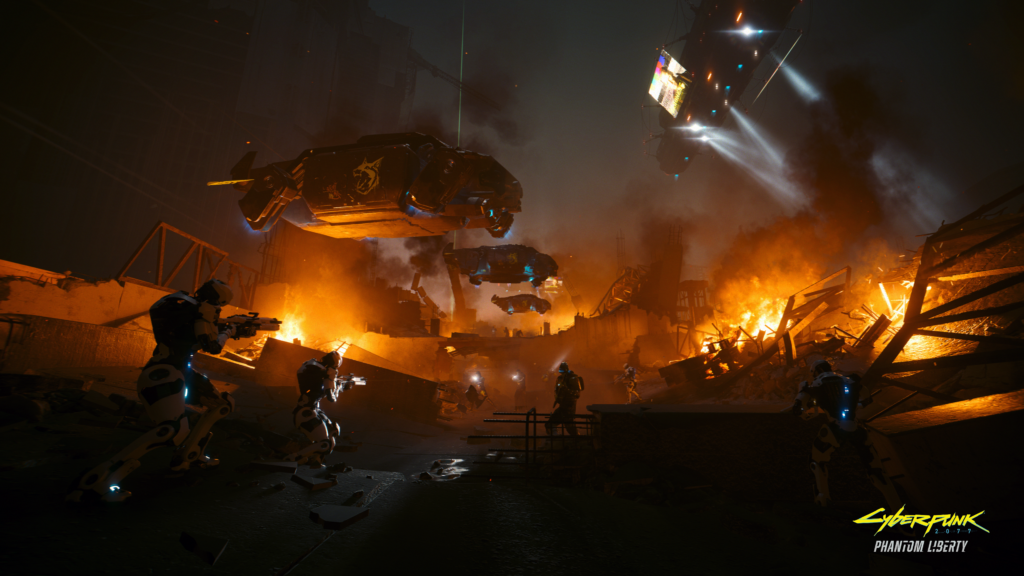
This is an odd one, where Phantom Liberty is one of my top ten games of the year but was a… disappointment. I loved Cyberpunk 2077 when it first came out, in large part because the characters really grabbed me. With Phantom Liberty, I didn’t reach nearly the same level of investment. The game kept telling me how cool and capable the characters were (sometimes even using my character’s own voice), but I wasn’t nearly as drawn in as my first time through Night City.
This does have a big caveat, however: I haven’t finished it yet. For me, that is a consideration: if I fall off a game and how/why I fall off can hurt a game in my estimation. But I’m invested to see this through, and it could certainly rise in my estimation as I get further in.
8. Cobalt Core
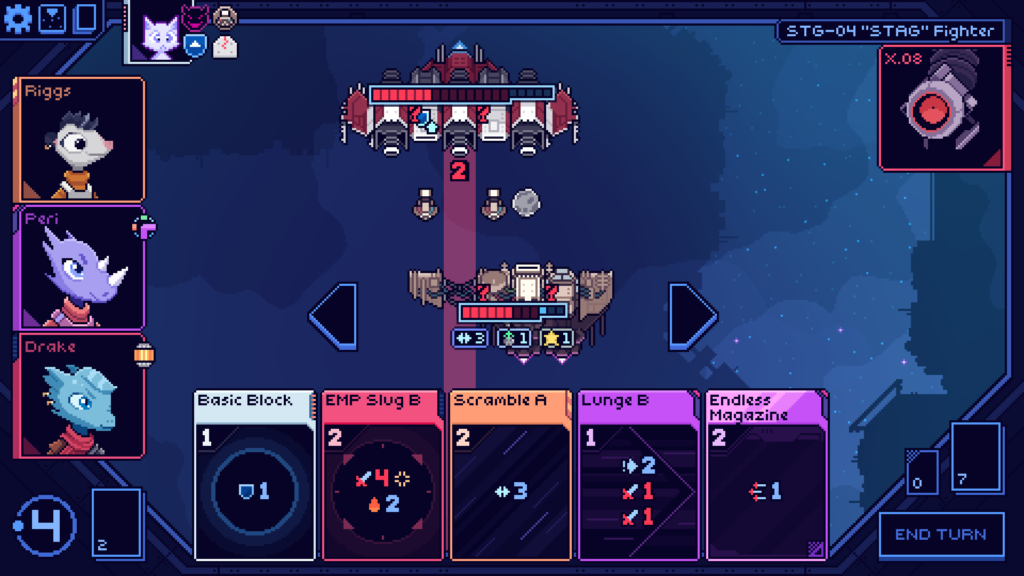
A solid blend of FTL and Slay the Spire, my only complaint is that it lacked some of the variety of other games of its ilk. The cards and artifacts in particular felt rather limited by the time I had successfully completed a run with each crew member and each ship. Still, doing so was a very pleasant 10+ hours that I would recommend.
7. Wayhaven Chronicles: Book One
Somehow this year I found my way back to Choice of Games. If you’re not familiar with them, Choice of Games publishes interactive fiction, or story games that let the player make choices to drive aspects of the story. I had played Mecha Ace back in 2014, but never made my way back until this spring when I was doing some research for Roll for the Gods. I came across the Hosted Games subreddit and was surprised to see that Choice of Games was still going strong (confusingly, Choice of Games splits its publishing into a few branches, including Hosted Games).
Based on the recommendations from the subreddit, I checked out Wayhaven Chronicles and found that I liked it quite a bit. There’s an element of potato chip romance to it and really to a lot of ChoiceScript games, but I enjoyed getting to know Unit Bravo and then pulling back the curtain on how it was all implemented with some code diving (likely there will be more on that in a future post).
The final note is that I didn’t include a screenshot for this or any of the other ChoiceScript games because they’re truly as bare bones as it gets: they’re text on a plain background with buttons to advance the story and select choices. Just a warning in case somebody decides to check them out.
6. Astrea: Six-Sided Oracles
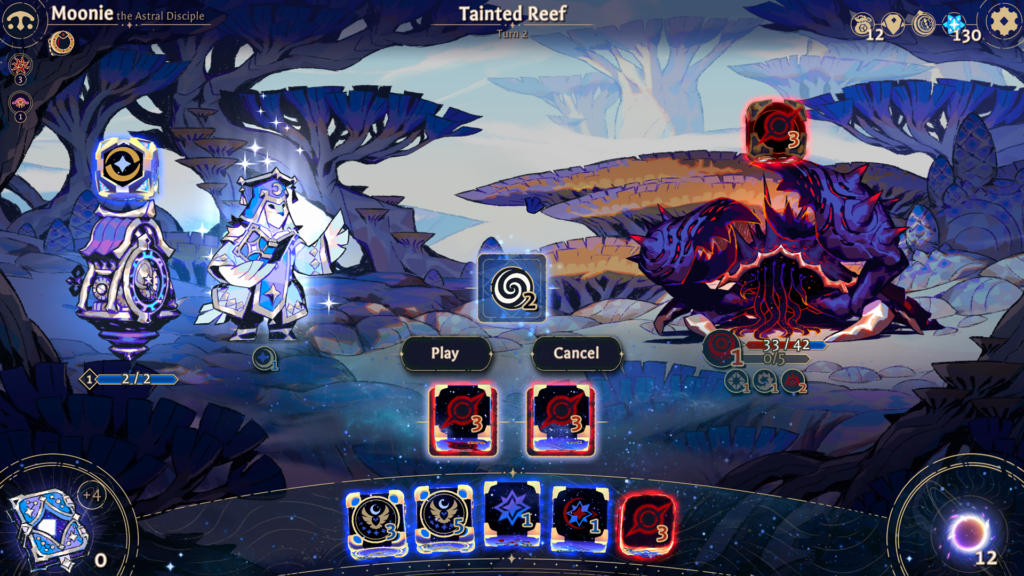
Computer-rolled dice almost always rub me the wrong way, so it’s a testament to Astrea that I enjoyed my time with it so much. A “DICE-deck-building roguelike,” you build up a pool of dice with various effects to defeat foes. The key to making it work for me is that it gives you a lot of tools to mitigate bad rolls and/or reduce variance; it was rare that I ever felt completely stuck with a terrible roll.
I also want to highlight its Damage/Healing system and how it ties into its character designs. Rather than a simple damage vs healing paradigm, abilities do things related to Purification and/or Corruption. Purification heals you and your allies, but it damages your foes. Corruption does the opposite. Separately, your character then has abilities that you can activate each turn when you fall below certain health thresholds.
These factors combine to set up interesting play patterns where you try to drop your health (with Corruption) to use your character-specific abilities, and then heal back up (with Purification) to tank your foes’ responses (which in turn can activate your abilities again). The complexity only ramps up even further from there.
5. Fallen Hero: Rebirth
About a month after reading Wayhaven Book One, I was pulled in by /r/hostedgames‘s near universal recommendation: Fallen Hero. Rebirth is the first game in the series and has you reappearing on the hero scene as a new player after an extended absence in which you were presumed dead. Your character’s plans require you to become a villain and face off with your former companions and rivals, but you retain some autonomy with how far you’ll go to accomplish your goals.
All of this sets up some very rewarding, soap opera-esque drama as you try to navigate the story, playing up different aspects of your character’s personality and seeing how the other characters in the game react.
4. Baldur’s Gate 3
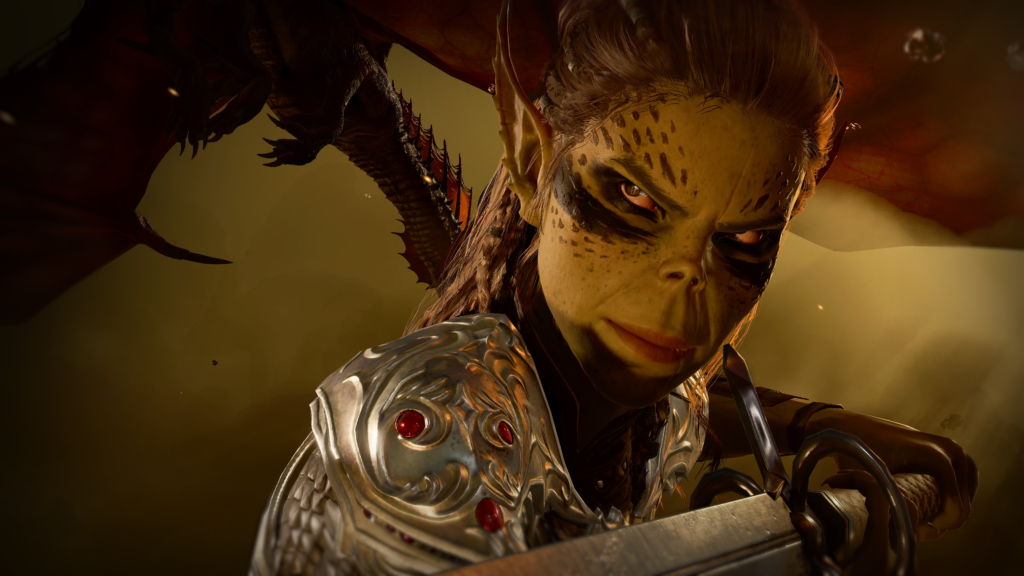
A game that, like Phantom Liberty, I expect to come back to in 2024. As you’ll soon see, Baldur’s Gate 2 is one of my favorite games of all time, so it was very cool to see its successor grab so many people. However, while I did enjoy my time with BG3, it hasn’t quite reached all time status with me. I suspect two reasons.
First, I find 5th ed. less interesting to play with. I haven’t really tried to pull apart why. It might just be that I don’t know it as well. Or maybe it’s just that other games have come a long way in 25 years, and so D&D feels a bit flatter than it did in the past.
Second, I think Larian’s characters sometimes fall into “pitch as character” in a way that pulls me out of it. What I mean is that the companions in particular often have a quirky, one sentence pitch that seems to drive everything about them. “She’s from hell and has an infernal engine implanted in her chest,” “He eats magic items,” and “He’s a seductive vampire.” Subjectively, this makes them feel like characters some friends rolled up to be the main character rather than organic characters that fit into the story. And, given that you can select them as your main character, it makes a degree of sense; they may very well have to don the main character mantle.
This is already getting longer than I intended, but I want to explicitly state that I do like the BG3 companions. I’ve just recently been mulling over why I only “liked BG3” and bounced off Divinity Original Sin 1 & 2 despite liking so many RPGs in their lineage. These are some of the thoughts that came to mind; perhaps more play in 2024 will bring different insights.
3. Mechabellum
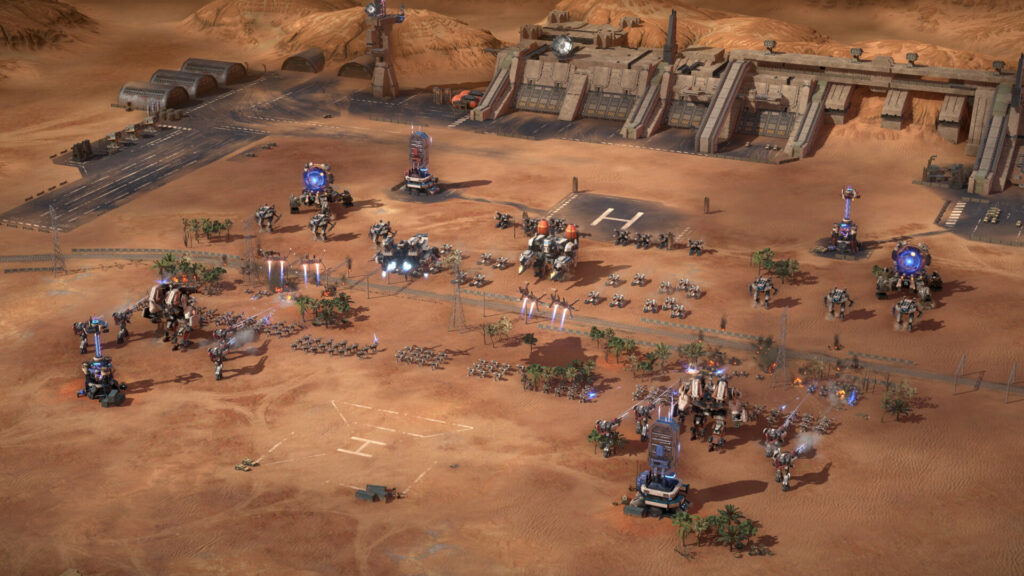
Mechabellum is the game on this list benefiting the most from recency bias. And I’ve also been playing it as a 2v2 game with a friend, so it gets the classic “more fun with friends” bump. But I’ve really enjoyed exploring Mechabellum.
It reminds me of when I first played Starcraft: I’d try some build or strategy and get destroyed. So, I’d steal that build and keep using it until I lost to someone else. Repeat for few hours, and suddenly you have some thoughts on how and when to use nearly every unit in the game. It makes for an appreciable evolution in how you think about the game; I remember specifically thinking about how Steel Balls were unkillable the first few times I faced them, but then utterly worthless as I watched mine waste themselves on swarm units.
I also find the game interesting because it seems to take on a notable place in the RTS lineage, a genre I really enjoy(ed). In the broad chain of evolution from RTS => MOBA => Autobattler, Mechabellum brings forward the huge masses of units in old RTSes. But it doesn’t require you to micro them while also managing a real-time economy. So you feel like a big deal without having to trip over your own slow hands.
2. Backpack Hero
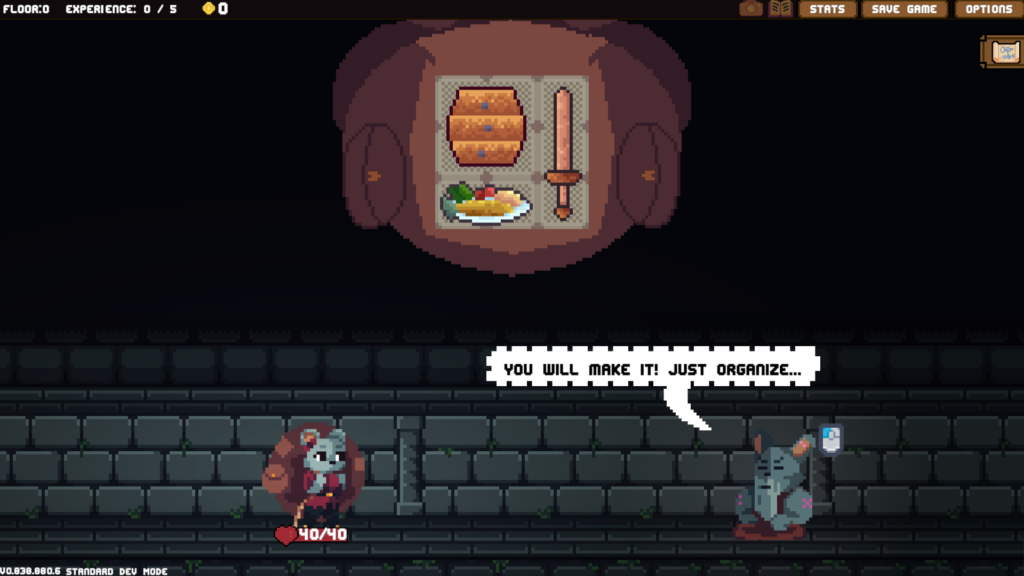
Backpack Hero has a lot of very fun and satisfying builds. It has you inventory-Tetris-ing weapons, armor, and consumables around in a growing backpack, creating setups that overwhelm your foes on the first turn. I played it a lot.
To be honest, I may have even played it too much. By the end of my time with it, I felt like its biggest weakness was enemy variety. I have some theories on why (too much time spent in early campaign levels, powerful characters that obliterate everything too easily, too few vectors of interaction for enemies with player), but I’m not sure that I would even want any of those things changed to address it.
Also, I did not like the campaign progression town. It was clunky to navigate (in a menu sense, not an in-world sense). Esc opening the top-level game menu instead of backing out of submenus sticks out in my mind. As does awkwardly trying to find the right character or building for an unlock; it took me more runs than I’d like to admit to realize I had everything to unlock the last character, but just hadn’t clicked the button yet.
But even still, setting up my backpack just right so that I could deliver hundreds of damage a turn was so good it more than made up for any quibbles I had.
1. Fallen Hero: Retribution
The strengths of FH: Rebirth are multiplied in the sequel. Like a lot of RPG fans, I’m a sucker for a sequel that pulls in my save, nods at some of the things I’ve done, and then builds on it even further. That’s what happens here: in Rebirth, you reveal your villain persona to the world, and now in Retribution, you get to bounce it off other heroes and characters while trying to maintain your secret identity. Other heroes begin to suspect what is going on as they see more and more of you, and more of your backstory and motivation is revealed. I enjoyed it a great deal and look forward to the sequel.
Which brings me to the only caveat I have with Fallen Hero: it is an in progress story, waiting on the next huge installment from its author. If things like abandoned book series or canceled shows bother you, you may have to be more selective in which ChoiceScript game you try.
Honorable Mentions
There were a few games that I played a lot and might have made it into the Top Ten above, but they were deemed ineligible under the Rules.
Factorio (played previously) – Probably my most played game this year. Started Krastorio 2, Space Exploration, and Krastorio 2 + Space Exploration runs (all multiplayer). Didn’t come close to “finishing” any of them. Also did a Lazy Bastard Run and watched a bunch of speed runs.
Danganronpa: Trigger Happy Havoc (played previously) – Mentioned above, but I actually prefer it to the sequel.
Starcraft II: Legacy of the Void (played previously) – Coop commanders are still great. It’s a bummer no game has really run with the idea (other than the custom mode map).
Backpack Battles (probably my number 11) – Inventory tetris game + autobattler. But I found the single-player extreme combos of Backpack Hero more enjoyable and this suffered by comparison.
Favorite Games of All Time
Lastly, I’ve decided to end this with my favorite 25 games of all time to give some further context to the list.
I’m not going to do a write up for each one; it’s just a list I made on Topsters sometime in September. But it might give some further evidence to the kinds of games I’ve liked in the past, and it’s fun to see how it shifts over the years.